The Blue River Complete Community Plan has officially been adopted, marking a pivotal step in the recovery and growth of a community deeply impacted by the 2020 Holiday Farm Fire. This ambitious project was a collaborative effort between the Lane Council of Governments (LCOG), Lane County, the Department of Land Conservation and Development (DLCD), and The Urban Collaborative (UC).
The Plan, tailored to the unique needs and vision of this rural, unincorporated community, integrates zoning, designations, and attributes that reflect the area’s character. Its focus on creating a walkable, bikeable, and livable community is a testament to Blue River’s resilience and aspirations for the future. Over a year of robust stakeholder engagement—including advisory committee input, public meetings, interviews, virtual sessions, and an online survey—shaped the Plan’s foundation.
The UC played a key role in crafting form-based code standards for the Blue River Drive Overlay Zone, ensuring the downtown develops as an inviting and identifiable space. This approach not only aligns with the community’s goals but also offers a replicable framework for other unincorporated communities in Lane County.
The Blue River Complete Community Plan exemplifies how thoughtful planning can transform tragedy into opportunity, paving the way for sustainable and equitable rural development.

As we head into the final weeks of the year, The Urban Collaborative (UC) is demonstrating why we remain a global leader in strategic planning and design. With four major in-briefs scheduled within just 12 hours to kick off the week, our firm is showcasing the depth of our expertise, the scope of our operations, and our unwavering commitment to delivering exceptional service to our clients—right up to the holidays.
Global Reach and Unparalleled Expertise
This week, UC teams are engaged in high-impact projects spanning three continents, a testament to the international demand for our work. At Misawa Air Base in northern Japan, a robust team is conducting a two-week Area Development Plan (ADP) charrette for two districts. Meanwhile, in Texas, another team is at Laughlin Air Force Base leading a week-long effort focused on critical CCR projects. Closer to home, a team is tackling a concept plan for an Air National Guard Base relocation in Fort Wayne, Indiana. And on the West Coast, our Camp Pendleton team is conducting the second USMC BEQ assessment, solidifying our role as trusted advisors for the Marine Corps.
These projects reflect not only the global scale of our operations but also the confidence our clients place in us to deliver innovative, actionable solutions for their most complex challenges.
Commitment to On-Site Excellence
At UC, we believe that proximity to our clients and their projects fosters the strongest outcomes. Our teams are embedded on-site for intensive charrette work, conducting interviews, assessments, and collaborative planning sessions to ensure every detail is accounted for. This level of engagement, even during the holiday season, underscores our dedication to being partners in every sense of the word—responsive, present, and proactive.
A Record-Breaking December
December is typically a time for reflection and planning, but this year, it’s also proving to be one of our busiest months ever. With multiple large-scale efforts underway, our teams are demonstrating the agility and expertise needed to manage concurrent high-stakes projects. This pace wouldn’t be possible without the support of our in-office team members who ensure seamless coordination and prepare critical submittals—often late into the night.
Multitasking at Its Finest
Behind the scenes, our team members are juggling responsibilities with precision and grace. From preparing deliverables for DCS G9 to advancing planning initiatives with the APA FPD, every member of our team is stepping up. This ability to multitask effectively and collaboratively is one of the many reasons clients return to us time and again for their strategic planning needs.
Looking Ahead
As we close out the year, we are reminded of what makes UC special: a global presence, a deep bench of talented professionals, and a commitment to being where our clients need us most. Whether it’s northern Japan, Texas, Indiana, or California, we’re there—working tirelessly to deliver excellence.
To our clients, partners, and team members: thank you for making this December a record-breaking month. As we gear up for another impactful year, we remain committed to designing solutions that matter and building partnerships that endure.
Here’s to a successful close to 2024 and an even brighter 2025!
Read the full article by Brian Brazzle, Col. Paula Loomis, PhD, AICP, LEED AP, FSAME, FAIA, USAFR (Ret.), and Matthew Freeby, AIA, LEED AP, NCARB via this link.
The American Institute of Architects (AIA) is honoring Paula Loomis, FAIA, a dedicated public servant and former U.S. Air Force Officer, with the AIA Award for Excellence in Public Architecture 2024.
WASHINGTON – January 18, 2024 – The American Institute of Architects (AIA) is honoring Paula Loomis, FAIA, a dedicated public servant and former U.S. Air Force Officer, with the AIA Award for Excellence in Public Architecture 2024.
The award recognizes architects, public officials, or other individuals who design distinguished public facilities and advocate for design excellence.
For more than 30 years, Paula was an officer in the U.S. Air Force, where her exemplary leadership and specialization in military facilities resulted in quality buildings that will continue to serve future generations. A dedicated civil servant, she has also worked for the three federal agencies with the largest facility portfolios and has advanced the government’s sustainability and resilience strategies. Today, her work continues as the director of research, senior planner, and senior architect for The Urban Collaborative, an interdisciplinary firm that pursues public architecture in the U.S., Europe, and Asia.
“As a public sector architect serving on the AIA National Board of Directors, Strategic Council, Board Knowledge Committee, Government Advocacy Committee, and numerous AIA organizations at local, state, and national levels, Paula is a model of the value of a lifetime of public and nonprofit service for the critical pipeline to practice and leadership for countless future generations of architects,” wrote Rona G. Rothenberg, FAIA, in nominating Loomis for the Excellence in Public Architecture Award.
Paula’s contributions to public architecture include developing more than 50 facility standards for a wide range of federal agencies and military branches that have shaped the character, resilience, and long-term viability of tens of thousands of facilities, maintaining 36 U.S. Air Force bases as command architect, and reimagining dormitories at Joint Base Langley-Eustis to better promote mental health.

Established by Congress in 1924, the National Capital Planning Commission (NCPC) is the federal government’s central planning agency for the National Capital Region (NCR). Through planning, policymaking, and project review of all federal and select local government projects in the NCR, NCPC protects and advances the federal government’s interest in the region’s development.
Project reviews are very thorough, include staff reviews, other federal agency reviews, local government reviews, and at least one public presentation. Total project review times can sometimes take years to complete with several public presentations.
The US Secret Service Rowley Training Center Master Plan Update completed a quick and highly successful NCPC review. The initial proposed plan aligned well with the NCPC policies making it possible to complete the review with one public presentation followed by a consent vote (the minimum required). The Commission commended the plan for removing buildings from the western perimeter, reforesting the western perimeter, and clustering new and old facilities in the center of the campus in a walkable campus with walkways connecting activity nodes. With the inclusion of all indoor ranges near the center of the complex, the Commission noted that noise will be less significant for neighbors. The Commission also commended the plan for committing to a proposed parking ratio of 1:2 for student and employees which will reduce overall carbon emissions. Finally, the NCPC staff found the UC staff easy to work with and quick to respond.
The Urban Collaborative spent time at Fort Campbell, Kentucky to help define requirements for a new Air Traffic Control Tower (ATCT). We spent time on site with their fantastic airfield management team, evaluating the existing ATCT to determine how to design a new one. For our team members who had never been in an ATCT before, it was an exciting experience!


The Urban Collaborative participated in a workshop held at Ramstein Air Base, Germany, with our joint venture partner TranSystems. Our tasks were to develop a conceptual plan for a new Security Cooperation Events Center (SCEC) and Campus Plan for Ramstein Air Base. The SCEC will support USAFE-USAFRICA and other units on the installation to include Air Force, Army, NATO, DoDEA and others as directed. The SCEC will be used to host high-visibility events and personnel and will be a focal point of the installation. The Campus Plan was developed to include inviting, walkable pedestrian quads, connected modern support facilities, and welcoming green space to support comprehensive, long-range development goals in the immediate surrounding area.


The Urban Collaborative held a NASA Agency Master Plan (AMP) leadership workshop at our Eugene office in October. We’re working with headquarters and all ten NASA Centers to develop to an AMP that will guide mission-driven real property investment prioritization decisions. Thanks to everyone who has contributed so far!


The Urban Collaborative (UC) has been selected to receive the seven-year global indefinite delivery, indefinite quantity (IDIQ) contract for architect-engineer (A-E) services with the U.S. Agency for International Development (USAID). This IDIQ contract has a $800 million ceiling focusing on water, environmental, energy and telecom services in developing countries to improve the quality of life. The UC is excited to perform A-E services internationally as a JV partner along with M&J Engineering in the International Development Collaborative
As part of the A&E III contract, the UC’s A-E services include architecture, master planning, GIS, capacity building, project management, and gender equity and inclusion consulting as well as related services to support USAID’s mission of promoting sustainable development globally.
“We are proud to support USAID and we are honored to have been selected for this important global services contract. USAID’s values align with our efforts to work collaboratively, empower women, develop sustainable environments, and protect and create economic opportunity for citizens worldwide” says Mark Gillem, Principal of the Urban Collaborative. With the mission of ending extreme global poverty and enabling resilient, democratic societies to realize their potential, USAID administers the U.S. foreign assistance program in more than 100 countries worldwide.
Led by partners the Urban Collaborative and M&J Engineering, our specialized team of 11 small and disadvantaged business subcontractors comprised of women owned, 8(a), veteran owned small business, service-disabled veteran owned business, HubZone, and an industry leading 501(c)(3) education and training institution, and one large business that covers the full scope of AEC services providing bench strength and capacity on any task assigned.
“As the new USAID Global A-E Services III IDIQ Deputy Program Manager, I am excited about the opportunity to serve critical humanitarian and development projects again after my previous role with Save the Children Philippines working as Research Advisor for project BURST (Building Urban Children’s Resilience Against the Shocks and Threats of Resettlement). I believe my unique experience developing innovative design solutions with communities in developing countries that are culturally relevant, build local capacity, and engage a diverse stakeholder group provides me a solid background for working effectively with USAID to promote their vision and goals. In my work in the Philippines as well as in India, Uganda, and Saudi Arabia, I have developed a deep respect for local design and construction tools, processes, and practices that offer opportunities for our USAID colleagues to increase project investment, sustainability, and resilience. I have come to appreciate USAID’s potential for sector-wide change to drive more collaborative approaches for culturally sensitive solutions to the world’s toughest humanitarian, economic, social, and infrastructure challenges.
The International Development Collaborative (IDCollaborative) team is a highly cohesive group of professionals who will provide effective and responsive support to USAID on all task order requirements from project inception to completion. The team includes a Joint Venture partner and nine other subconsultants with a combined total of 3,319 staff covering the full spectrum of construction phase services. Our project experience spans 89 countries, including Pakistan, Afghanistan, Iraq, and South Sudan. We have accomplished over 1,500 projects, winning 50+ awards, 15 of which were international awards for the U.S. Federal government, private sector, and foreign government clients. Our staff speaks a number of languages including English, Spanish, French, Tagalog, Bengali, Urdu, Hindi, Arabic, Farsi, and Pashtun.
I look forward to leading our IDC team as we work with USAID in tackling some of the world’s most challenging issues on the international development front,” says Lyndsey Deaton, PhD, RA, AICP, PMP, the UC’s USAID A&E III IDIQ Deputy Program Manager.
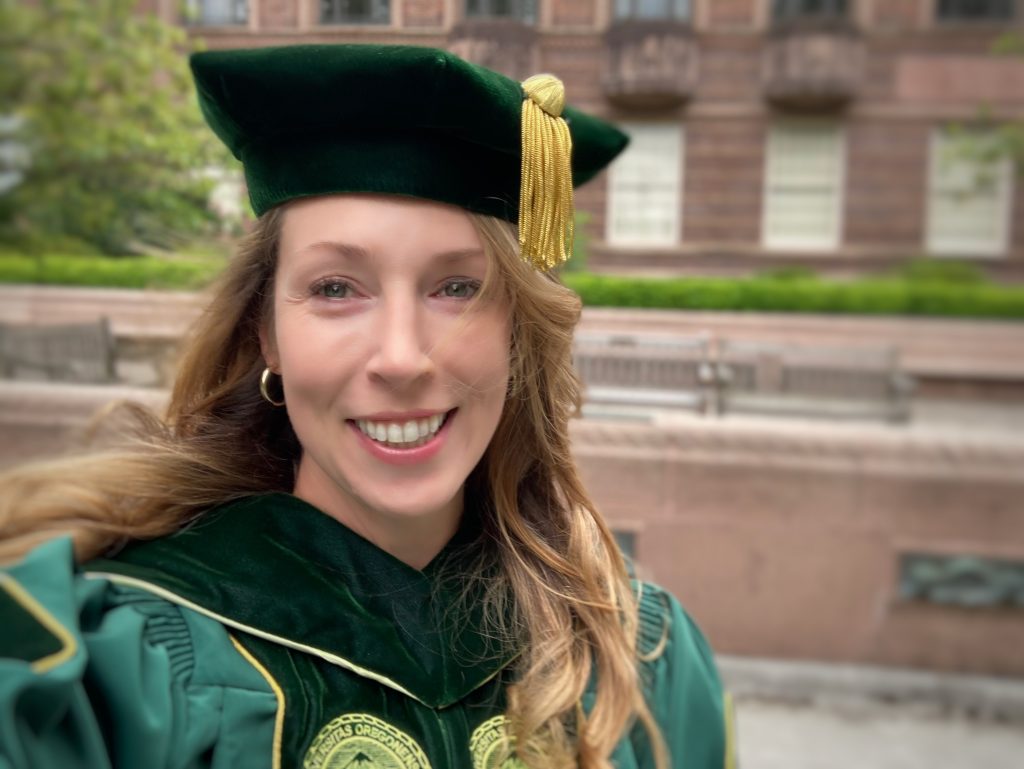
At the UC, we believe that sustainability encompasses social and economic issues as well as environmental issues. In part, that is why we are so proud of our Senior Architect and Planner, Lyndsey Deaton, PhD, RA, AICP, PMP for completing a Doctor of Philosophy in Architecture from the University of Oregon with her award-winning, trans-national dissertation, No Place to Play? Studies of How Adolescents Play in Dispossessed Communities.
Lyndsey has worked with the UC for over a decade leading teams of designers in practice while also pursuing her research on equitable public space with children in India and the Philippines. Her findings highlight the importance of a collaborative engagement process in developing sustainable cities, specifically with adolescent girls living in low-income communities. As a measure of research quality, the Environmental Design Research Association awarded her dissertation the Great Places Research Award for 2021. Congratulations, Dr. Deaton!